



AI Tools at Work: The Hidden Security Risks SMEs Are Ignoring
Artificial Intelligence tools have quietly become part of everyday work in small and mid-sized businesses. From writing emails and analysing spreadsheets to customer support and coding, AI is boosting productivity across teams.
But there’s a problem most SMEs haven’t thought through. AI adoption is happening faster than security controls. And that gap is creating real, often invisible risks.
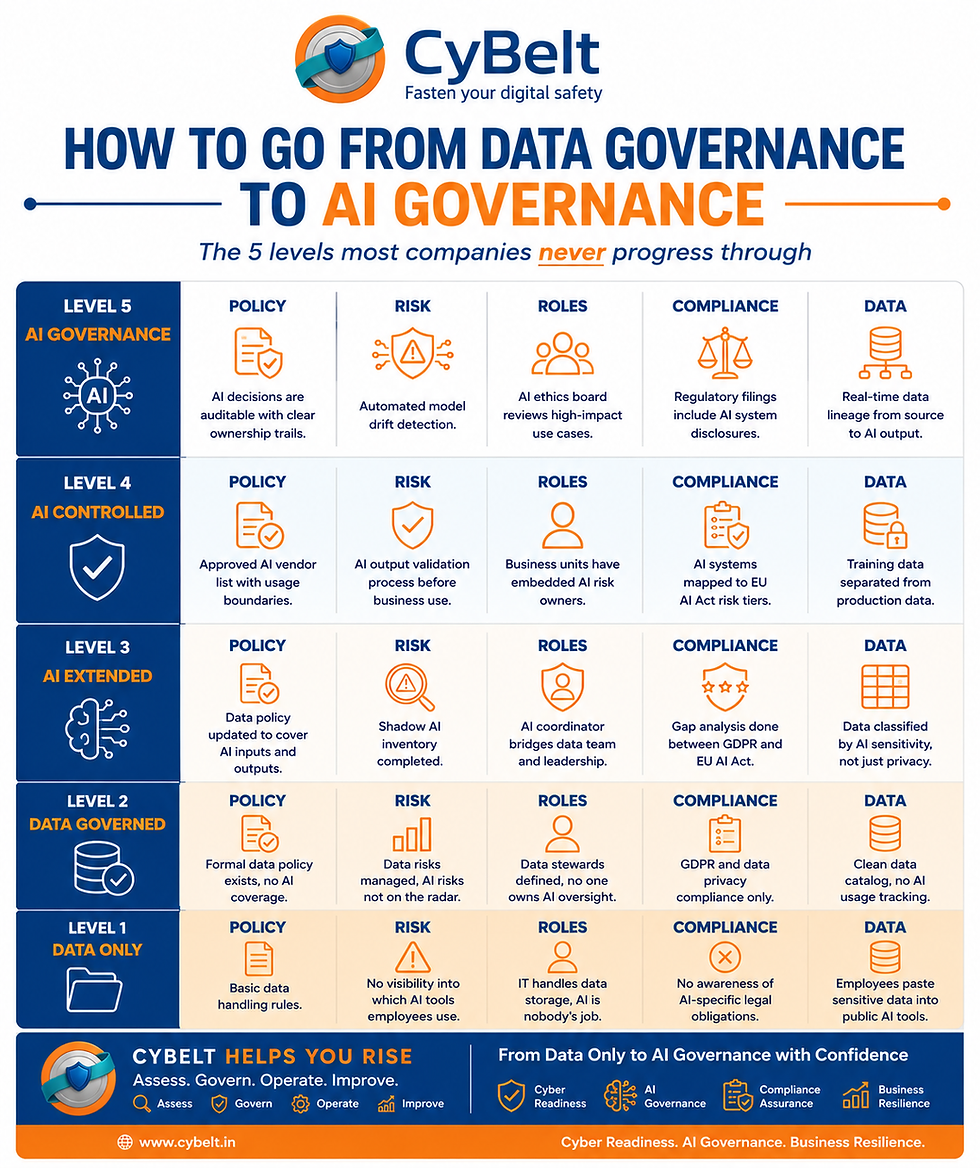
AI Is Already Inside Your Business - Whether You Approved It or Not
Employees today use AI tools like chatbots, AI writing assistants, image generators, and code helpers as part of normal work. In many SMEs:
There is no formal approval process for AI tools
No guidance on what data can or cannot be shared
No visibility into who is using what
This phenomenon is often called “Shadow AI” — tools used outside official IT oversight.
Unlike traditional software, AI tools often require users to input data. That’s where risk begins.
The Real Security Risks SMEs Are Overlooking
1. Sensitive Data Exposure
Employees may unknowingly paste:
Customer data
Financial details
Contracts or internal documents
Source code or credentials
Once submitted, this data may be logged, stored, or processed outside your control — potentially violating confidentiality and data protection obligations.
2. Lack of Data Boundaries
Many AI tools do not clearly guarantee:
Where your data is stored
How long it is retained
Whether it is used for training models
For SMEs subject to DPDP Act or contractual confidentiality clauses, this can become a compliance issue.
3. AI-Generated Errors and Over-Trust
AI outputs can be:
Incorrect
Incomplete
Misleading
Over-reliance without verification can lead to business, legal, or operational mistakes — especially in finance, legal, and customer communications.
4. Credential and Code Leakage
Developers and IT staff sometimes use AI tools for debugging or scripting. This can result in:
Exposure of API keys or passwords
Insecure code suggestions being reused
Weak security patterns being unintentionally introduced
5. No Incident Visibility
If an AI tool causes a data leak or misuse:
Most SMEs have no logging or monitoring
No incident response playbook covering AI use
No clarity on reporting or remediation steps
Why SMEs Are More at Risk Than Enterprises
Large organisations often have:
Formal AI usage policies
Approved enterprise AI tools
Legal and security reviews
SMEs, on the other hand, rely on speed and flexibility — which means AI adoption happens informally. That makes SMEs easier targets for data leakage, compliance failures, and downstream cyber incidents.
You Don’t Need to Ban AI - You Need Guardrails
AI can be used safely in SMEs if basic controls are in place.
Here’s what “good enough” looks like:
1. Define What Data Can Never Be Shared
Create a simple rule:
No customer personal data
No financial records
No passwords, credentials, or internal documents
This alone reduces most risk.
2. Identify Commonly Used AI Tools
You don’t need full surveillance. Just know:
Which tools teams are using
For what purpose
With what type of data
Visibility comes before control.
3. Update Awareness Training
Add a short AI security section to your cyber awareness training:
What AI tools can and cannot be used for
Real examples of risky behaviour
Simple do’s and don’ts
4. Include AI in Your Cyber Risk Assessment
When reviewing security posture, include:
AI data flows
Third-party AI platforms
Cloud storage and access implications
AI risk is now part of cyber risk.
5. Prepare for AI-Related Incidents
Your incident response plan should consider:
Accidental data exposure via AI tools
Reporting obligations under DPDP Act
Immediate containment steps
The Bottom Line
AI tools are not the enemy — unmanaged AI use is.
For SMEs, the biggest risk is not sophisticated AI attacks. It’s simple data exposure caused by everyday AI usage. You don’t need expensive tools or complex governance. You need clarity, awareness, and a few practical controls.
That’s how SMEs can benefit from AI without creating new cyber blind spots.
How CyBelt Helps
At CyBelt, we help SMEs:
Identify hidden AI-related risks
Update cyber audits to include AI usage
Build simple, practical AI security guardrails
If your business is using AI tools — intentionally or not — it’s time to assess the risk before it becomes an incident.
Comments